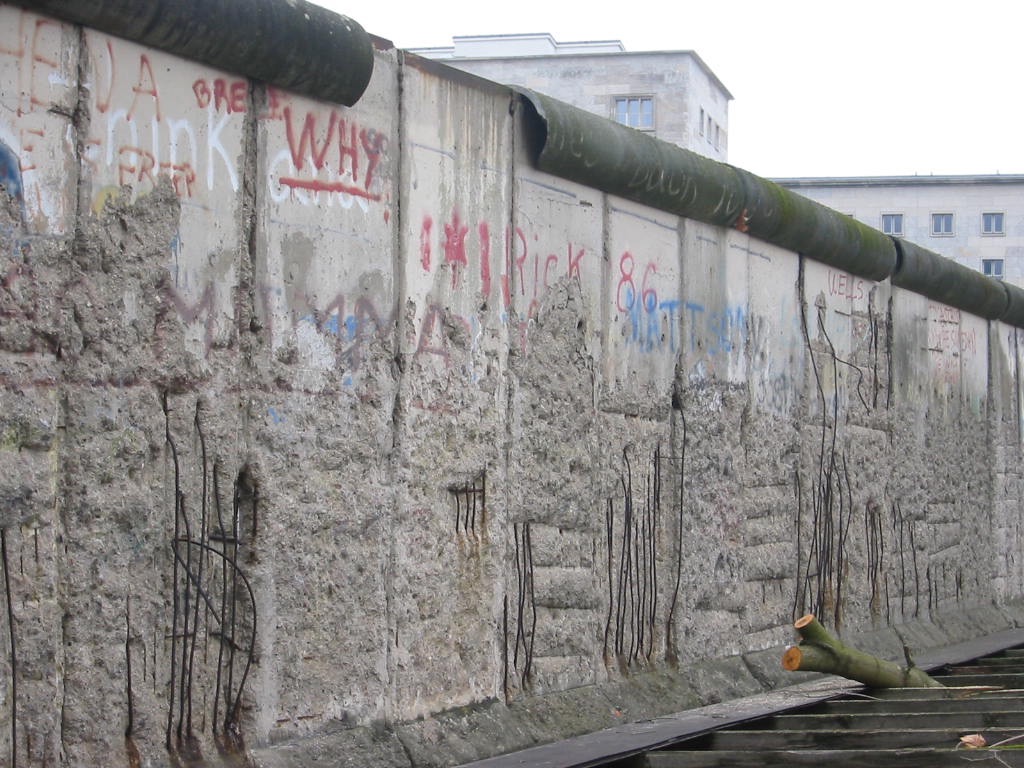
On this day in 1961, Berliners woke up to find East German army and police units busy building a makeshift barrier through their city. Over the following days and weeks, barbed wire was replaced by concrete blocks, then by pre-fab wall units. The Berlin Wall would be in place for 28 years, until November 9, 1989. The Berlin Wall was part of the GDR’s much larger militarized border system, which also included the 1,400 kilometer long border between East and West Germany. During my bicycle expedition along that border – today’s Green Belt – I spoke to many people whose lives were affected by it. Below is an excerpt from one of my most memorable conversations.
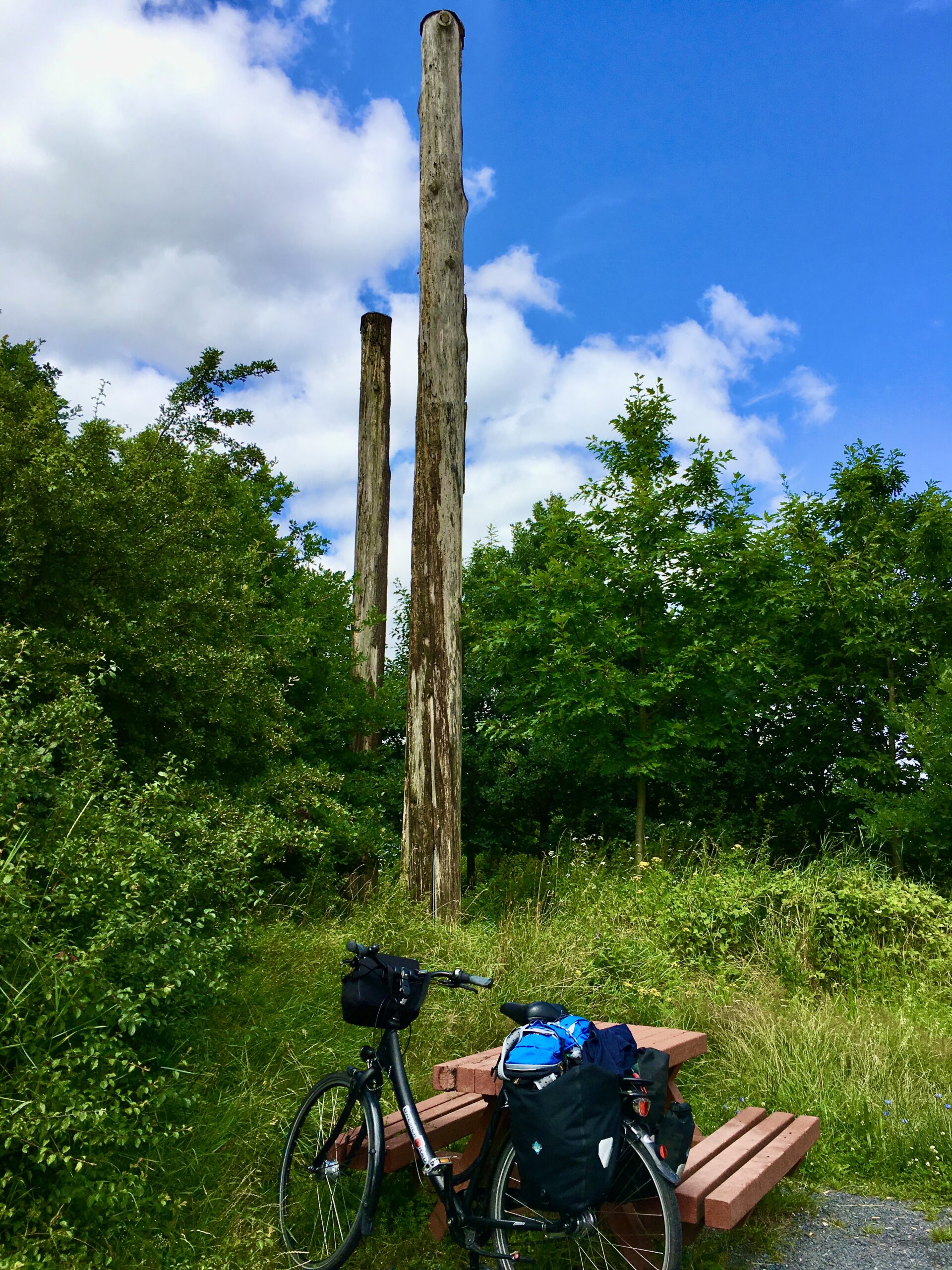
I leaned my bike against the picnic table and walked closer to the oak grove. The trunks were slender, no thicker than my arms, but the leaves formed a sun-dappled canopy well above my head. After a few minutes of peering through the undergrowth, I spotted two tall oak posts: the West-Eastern Gate. […]
I sat down at the picnic table to drink some water. There was a serene beauty about this place, and yet it had a lonely feel. Do people ever come here?
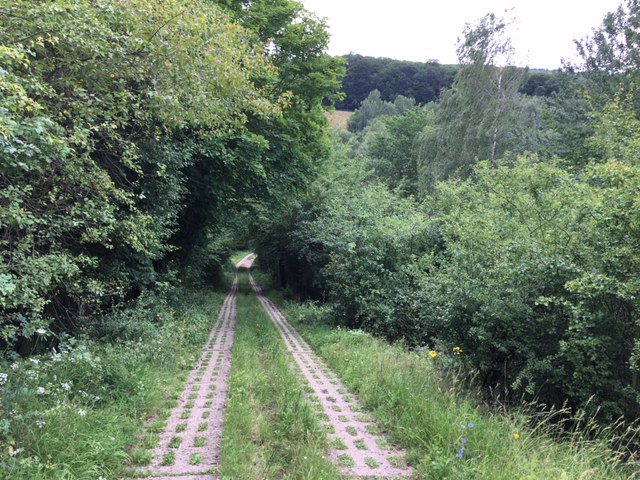
As if in response, another bicyclist approached the clearing, a fit-looking man I estimated to be in his mid-sixties. We both said Guten Tag. He leaned his bike against the sign and looked at the photo, then came over to the sole table, asked “May I?” and sat down across from me, then looked at the oak grove and to the opposite side, where the concrete slabs of the patrol track took a steep turn down the hill.
With some people, silences can be awkward. After a few moments, this complete stranger and I fell into an easy conversation, and I sensed a calmness about him, an uncomplicated gentleness that told me he was not one to be bothered by silence. He asked about my journey and told me about his—he had picked the West-Eastern Gate as his destination for a day trip—and I learned that he was a retired teacher and had lived in the western Harz region for forty years now. […]
The friendly silence returned for a few minutes and we took in the stillness of the place. After a while I asked what memories he had of the time of the German division. He reflected for a moment.
“I suppose my first memory of it is connected with heartbreak. In the summer of 1961, when I was thirteen, I had my first glimmer of romance with a girl from East Berlin,” he began. “She was visiting relatives in the west with her family. One day her parents received a call from a relative back home—something had happened in Berlin, a wall was being built through the city. At thirteen, we couldn’t know what any of this meant. But I still remember the feeling of absolute turmoil that came over her family. They packed up their belongings and left the next day.”
“Did you ever hear from her again?” I had a feeling I already knew the answer.
“No, I never did,” he said with a mix of sadness and wonder in his tone.
It is not often that a stranger confides his first heartbreak. I needed a moment to take in the layers of his loss: the girl’s sudden and final departure, the not knowing what happened to her, the realization that geopolitical events could interfere so profoundly in the lives of regular people, even thirteen-year-olds.
We both stared out at the patrol track where it stretched from the little oak grove down the southern side of the knoll.
“I wish everyone could come to a peaceful place like this to contemplate their losses,” he continued. “It’s important to feel them.”
As we sat quietly again, I noticed a large bird sailing elegantly above us. Its forked tail made it look a bit like an oversized swallow, but the head was raptor-like and this bird flew much more calmly and slowly than a swallow. “A red kite!” I pointed to where it circled the West-Eastern Gate. “That’s a rare species!” I felt the urge to share some of what I had recently learned. “Its habitat keeps shrinking, but at least its German population has stabilized in recent years.”
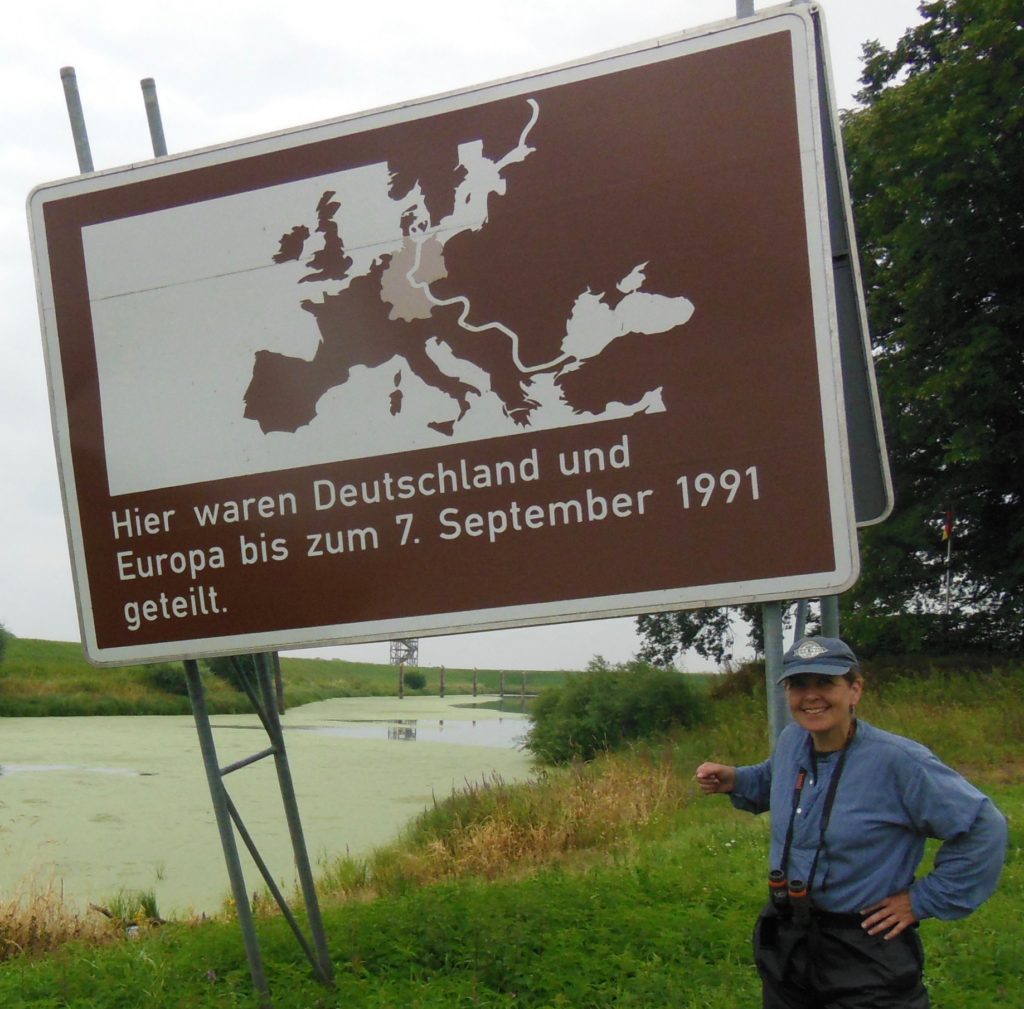
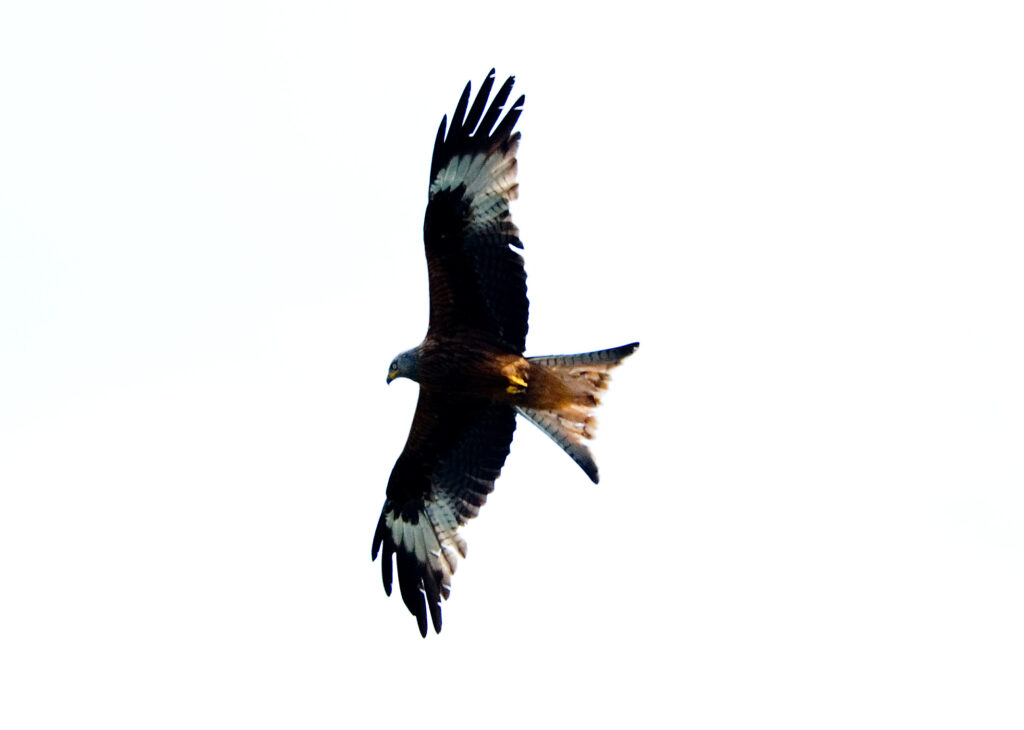
“It must have a great view of the Green Belt from up there,” the man mused.
“Yes, and of tasty critters to eat,” I agreed.
I looked at my watch. It was later than I thought. I thanked my conversation partner and pointed my bicycle toward the patrol track. He waved goodbye, a hint of a smile on his face. For a moment it seemed odd that we did not know each other’s names. But like the silences in our impromptu conversation, the absence of a name carried no sense of anything missing. What mattered was knowing that openhearted encounters with strangers could, and did, happen. I knew even then that this one would stay with me, another treasure in my store of Zuversicht.
*
Zuversicht: a sense of a positive future
Red Kite photo © Stefan Krause, all other photos © Kerstin Lange
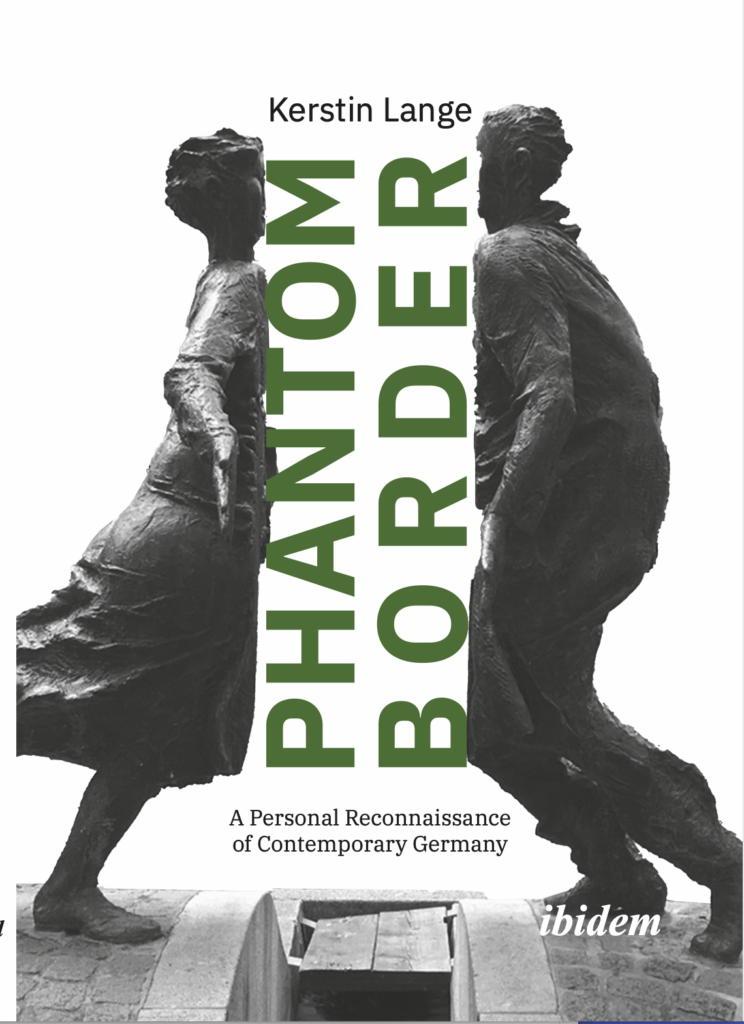
For more about the border and its human and ecological dimensions, you can get your own copy of Phantom Border. A Personal Reconnaissance of Contemporary Germany here or anywhere books are sold. I also love it when people ask their local library to provide a copy (or two) to their readers.









Beautiful story, Kerstin. We need more peaceful encounters of this kind. Thank you for sending!
Thank you so much Elise! I agree, we need more peaceful encounters.
Love this story. Bittersweet. Deep sadness lightened by a gift from the natural world, a rare bird bringing hope. Thank you, Kerstin, for including this story in your wonderful book.
Thank you so much Henry!